Who we are
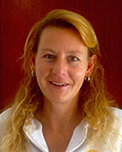 Trixi Blumschein
Trixi Blumschein-Plüddemann studied physiotherapy in Frankfurt, Germany, where she obtained her qualification in 1990.
She was first registered as a Physiotherapist in South Africa in 1998.
She also worked as a registered physiotherapist in the UK between 2005 and 2008.
Since late 2008 she is living and working in Cape Town.
She holds an Advanced Diploma in Physiotherapy – Neurology from Wits University (2001).
She holds specialisations in both neurological and orthopaedic rehabilitation, including Bobath, Mulligan, Manual Therapy (Kaltenborn/Evjent) , PNF, Cyriax, Dry Needling and Integrative Fascial Release technique.
She is able to see and treat her patients in English, German and Spanish.
How we operate
We are a cash practice, meaning that the client is responsible for settling the account with us directly, and can then subsequently claim from their medical aid.
First-time patients are usually sent their first invoice after the initial one or two treatments, while repeat patients are invoiced once a month. A discount of 20% is offered if payment is made within 7 days of invoice.
Under certain circumstances we will deal directly with the patient’s medical aid, e.g. if the physiotherapy treatments form part of a hospital admission.
Our rates are in line with what most medical aids re-imburse, and compare favourably if the early-payment discount is considered.
Philosophy
We have a holistic approach to each of our clients, ensuring that during our initial assessment we get to the root of the condition. We will advise our clients if we believe other professionals like occupational therapists, speech therapists or psychologists should be involved, as well as carers and/or family members.
We like to set goals with our patients, both short-term goals (STGs) and long-term goals (LTGs), which helps to keep both the patient and the therapist focussed.
These goals are usually task –orientated, e.g. a STG might be walking with a stick independently, while the LTG might be to walk without any walking aid.
We will offer advice regarding the need for walking aids, including assessing which one is best to ensure a secure and functional gait. Similarly we would advise on the need for assistive devices for the activities of daily living, e.g. shower or bathing aids.
Each of our clients receive an individual exercise programme which is regularly reviewed and adjusted to optimise the outcome.